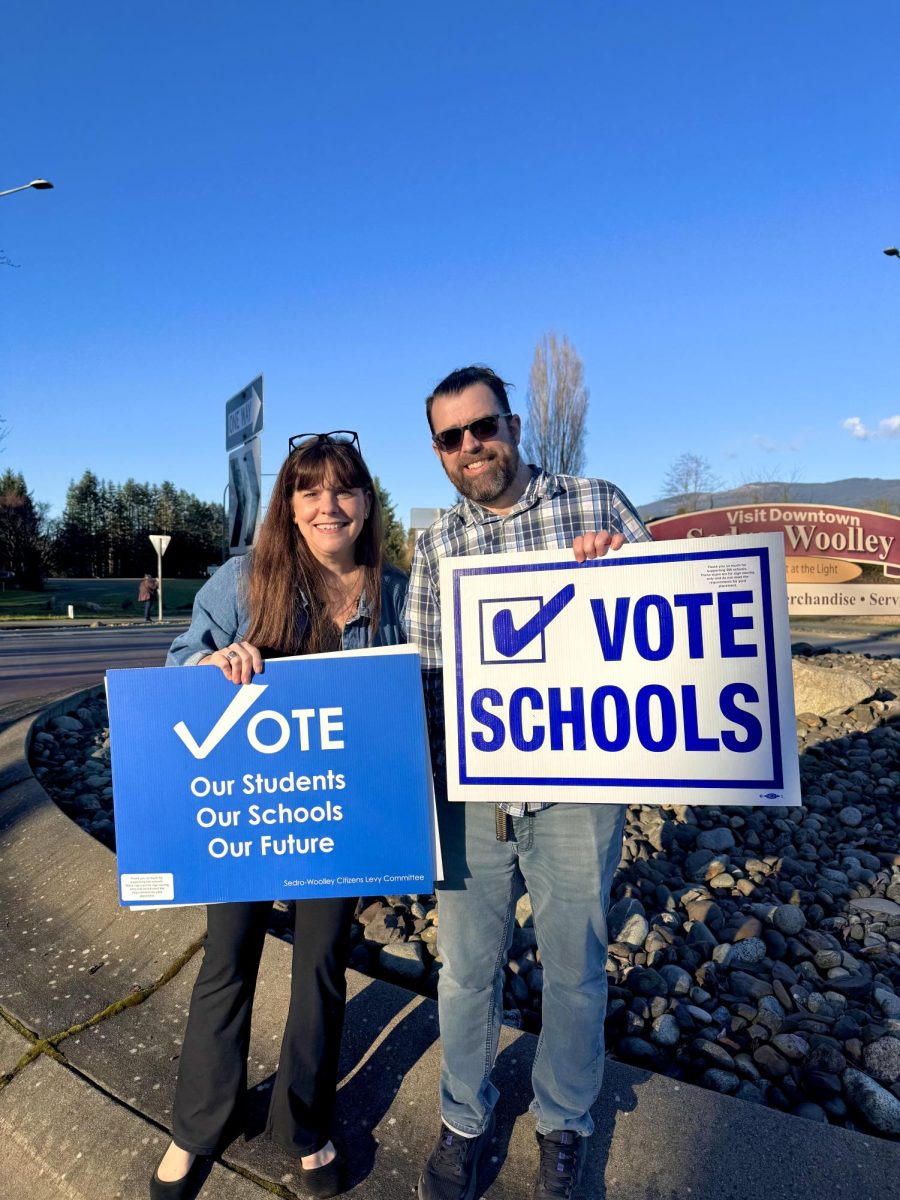
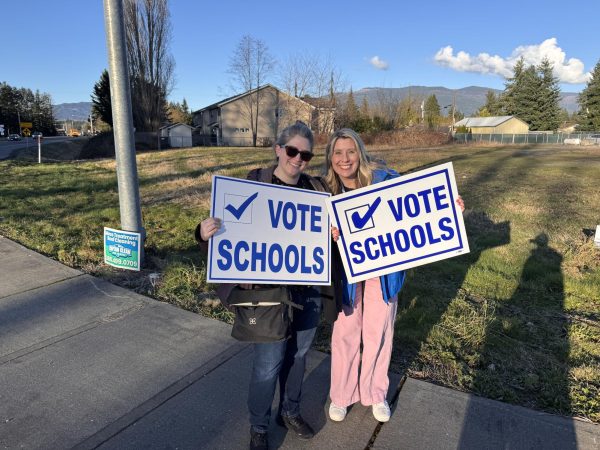
The Sedro-Woolley School District won two levies that went before voters on February 10 and were certified on February 20 in a nail-biting election.
The district had two replacement levies on the February 10 ballot. Replacement levies are voter-approved property-tax measures that continue local financial support that is not fully funded by the state, according to the district.
“It’s not an additional [levy], it’s just a replacement [levy],” said Kerri Carlton, the principal of Sedro-Woolley High School. “It helps pay for making sure we have enough nurses and making sure we have enough teachers to keep class sizes down.” The Levies help pay for staff, programs, and services (Educational Programs & Operations), as well as ongoing facility maintenance, safety, and technology needs.
During the vote, a lot of school district employees and parents with students in the school district were worried about the levies not passing, because without levy funding, the district would have faced difficult budgeting choices. State funding alone isn’t enough to maintain current staffing and services.
According to the SWSD Public Information Officer Ruth Richardson, this would have meant reductions in staff positions, fewer extracurricular opportunities, larger class sizes, cuts to maintenance or technology replacement plans, or shifting money from core instruction to cover basic operating costs which, she said, would have affected students’ learning experiences.
“I wouldn’t necessarily say that it would shut down our school, but it would directly impact the high school,” said Carlton before the election results were finalized. “They might have to look at changing our schedule. They might not be able to provide as many classes. There might not be able to have as many paraprofessionals, which are like your teacher support. That’s why it’s so important.”
The people most affected by the levy are the students, according to Kelly Hawkins, a teacher at SWHS. She is the ASB advisor and yearbook advisor at SWHS.
“Our kids are going to benefit the most from the levy,” said Hawkins.
Some critics against the levy questioned the money going to athletic facilities, like Janicki Fields instead of going to school supplies. According to Hawkins, athletics is important to education and student life.
“Athletes at our school are the ones that are held to the highest standards. They have to get good grades, they have to be at school, and athletics is just such an important factor.”
Other critics worried about property taxes. According to the voter’s pamphlet, the district was requesting an increase from the current $2.15 to $2.50 per thousand of assessed value. For a $500,000 home, that’s $5,000 total over four years.
“It’s great that your assessed value of your home goes up, because that’s good for everyone, but then when your tax dollars go up, it means you have to pay more into taxes,” said Carlton.
Carlton believes that the district has done a good job in budgeting district money.
“It’s not like there’s a plethora of people that are just doing extra jobs, I mean, they’re running with very few people to try and keep us going,” said Carlton.
Carlton says salaries do make a huge portion of the overall expenses, but that the district is in need of staying competitive with salaries to keep good talent in the district.
“So if I’m a teacher and I want to work for Skagit, or Whatcom, or Snohomish, we keep and retain quality teachers, and if we paid like, super low. That’s harder, because if I’m a teacher, and I could teach at a neighboring district, and I can make this much more money…, so all your salaries need to be competitive.”
When the levy yes votes exceeded the no votes on Wednesday afternoon, there were anti-levy voices that questioned the voting results as being rigged on online forms, with some of them even saying that it was rigged “like every democrat involved vote” and even calling for a lawsuit and investigation against the district for fraud, which hasn’t been proven.
However, when the results came in on Friday, many were relieved.
In Carlton’s opinion, voting yes for the levy is a matter of principle that she got from her up-bringing.
“When I was growing up my dad always said to my sister and I, whatever community you live in when you get older, always vote yes for schools,” said Carlton “My dad believed in the importance of education, as he was a member of the local school board and taught at a Community College in Illinois near Chicago. I grew up in the public school system south of Chicago, and I loved the schools I attended. I will always be very passionate about supporting local levies that help fund schools because we are creating our future leaders in our community and our nation.”