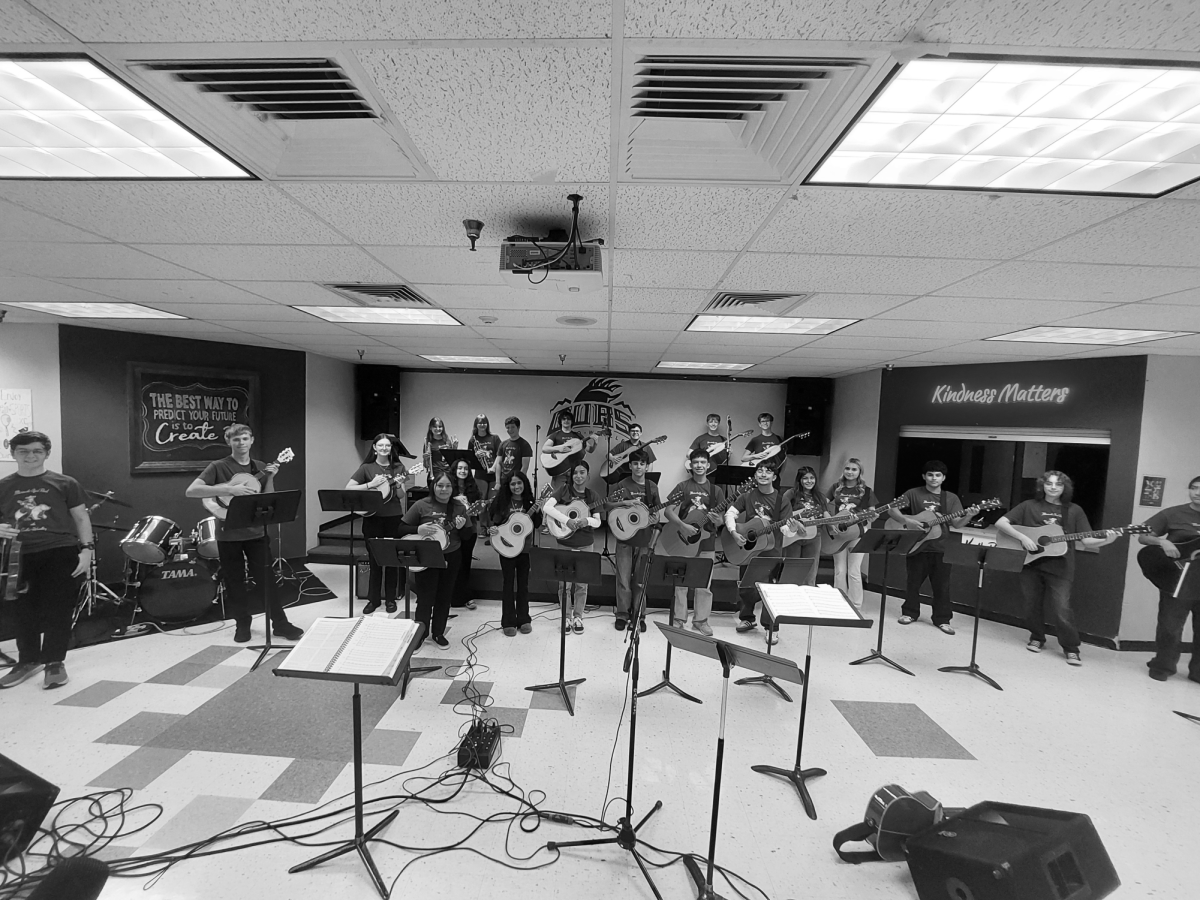
Inocencio Medina Farias and Alondra Plascencia, both guitar players at Sedro-Woolley High School, have been influenced by mariachi music by helping them understand both their culture and musical expression.
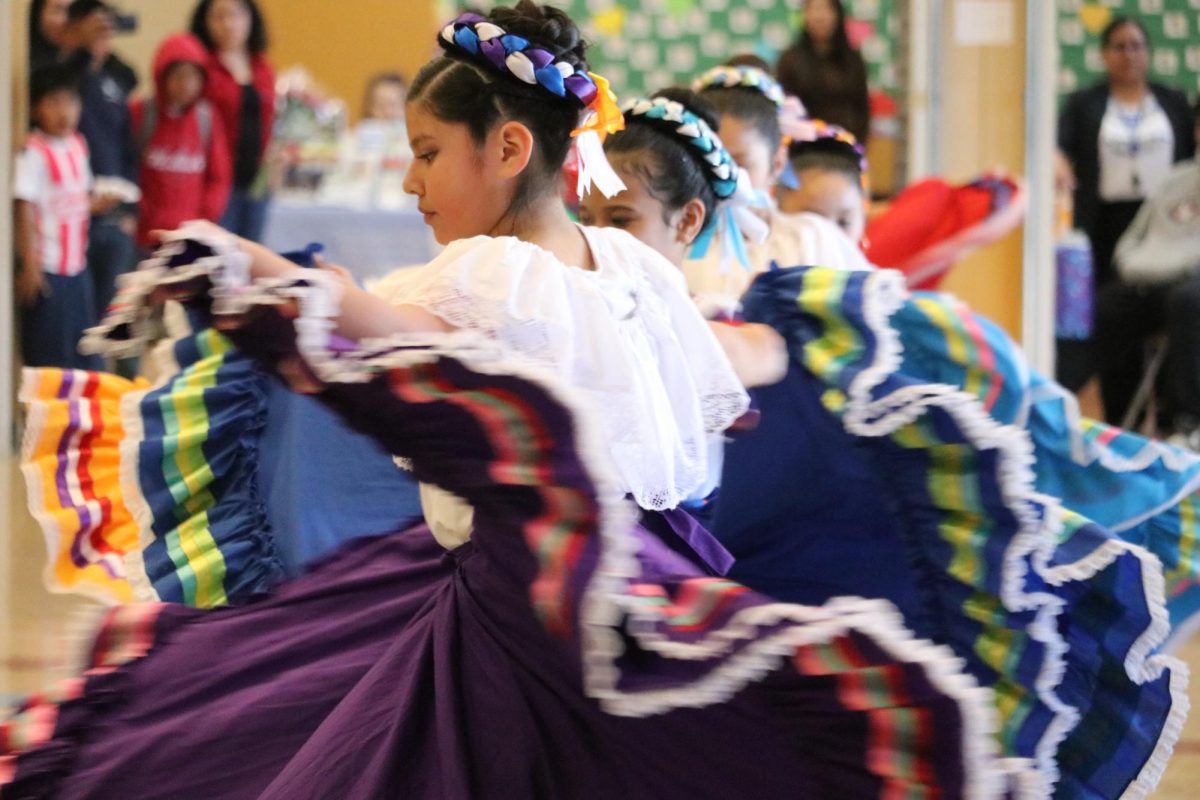
The presence of Latino music in the United States has deep roots that go all the way back to the late 19th century. When immigrants from Mexico arrived to work on the railroads and in the stockyards, they brought their music with them. Perhaps the most popular style of music among these early arrivals was the Corrido. Today, mariachi continues to connect generations and give students like Medina Farias and Plascencia a chance to celebrate their culture through performance.
“Writing a lot is a skill I needed to develop to write songs to play,” said Medina Farias. “And also because you need to constantly use your wrist when playing the guitar,” He added. “Listening carefully is also a skill I needed to learn to play better.”
For some students, joining mariachi was about more than just learning an instrument–It was more about finding confidence through playing and the community.
“I wanted to join mariachi because my friend and I thought it would be a good opportunity, and a fun activity as well,” said Plascencia. “I felt happy that I was learning how to play an instrument that was related to my culture.”
Both students credit their teacher, Bradley Hendry, for making mariachi an engaging and meaningful class. His role goes beyond teaching music, he encourages cultural pride and collaboration among his students.
“When I first started the mariachi class, I didn’t realize how much it would impact the students,” said Hendry. “It’s more than just notes and rhythms, it’s storytelling through music. I’ve seen students grow confident and proud of their skills within each class,” He continued. “Mariachi gives them a voice through their actions and connects them to a part of their heritage that deserves to be celebrated.”
While both Medina Farias and Plascencia continue to improve their skills, they say mariachi has helped them find joy in practice and performing—and that encouragement from Hendry keeps them motivated.
“When I’m performing or practicing, what goes through my mind determines whether or not I have the song memorized,” said Alondra. “If I do, I just relax and jam to it.” Hendry added, “The best part is seeing students lose themselves and simply enjoy the rhythm of the music.When they just stop worrying about if it’s perfect or not and just play from the heart–that’s when mariachi really feels alive.”
Sedro-Woolley’s mariachi program has also encouraged students to connect music to their daily lives and express themselves creatively.
Categories:
Finding Identity in Every Note or Mariachi
More to Discover